
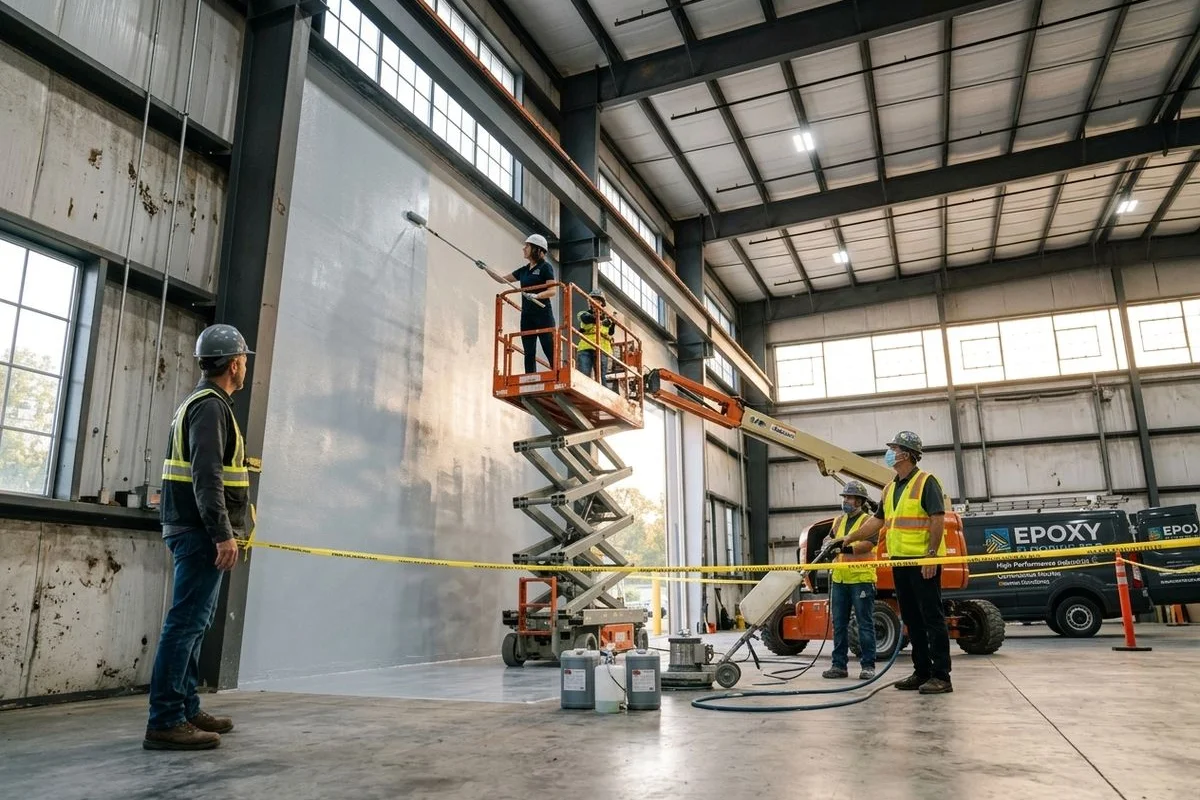
Industrial Wall Coating & Painting Services in Detroit, MI
Turnkey industrial painting and wall coating services for Detroit automotive plants, food processors, and manufacturing facilities — from floor to ceiling, one contractor.
One Contractor. Every Surface. Detroit’s Manufacturing Facilities Covered.
Metro Detroit’s industrial facilities share a persistent problem: floor coatings contractors say walls are out of scope, painting contractors say industrial floors are not their specialty, and the plant manager is left scheduling and supervising two separate crews with two separate mobilizations, two sets of invoices, and twice the potential for schedule conflicts. In a region where every automotive OEM and Tier 1 supplier runs tight production schedules with narrow shutdown windows, that coordination overhead is more than an annoyance — it directly costs production time.
Epoxy Flooring Pro was built to solve that problem. We are industrial coating contractors — not residential painters who occasionally take on commercial work. Our crews are trained, equipped, and staffed to handle every coated surface in your facility, from the floor to the ceiling, including walls, columns, structural steel, and overhead piping chase enclosures.
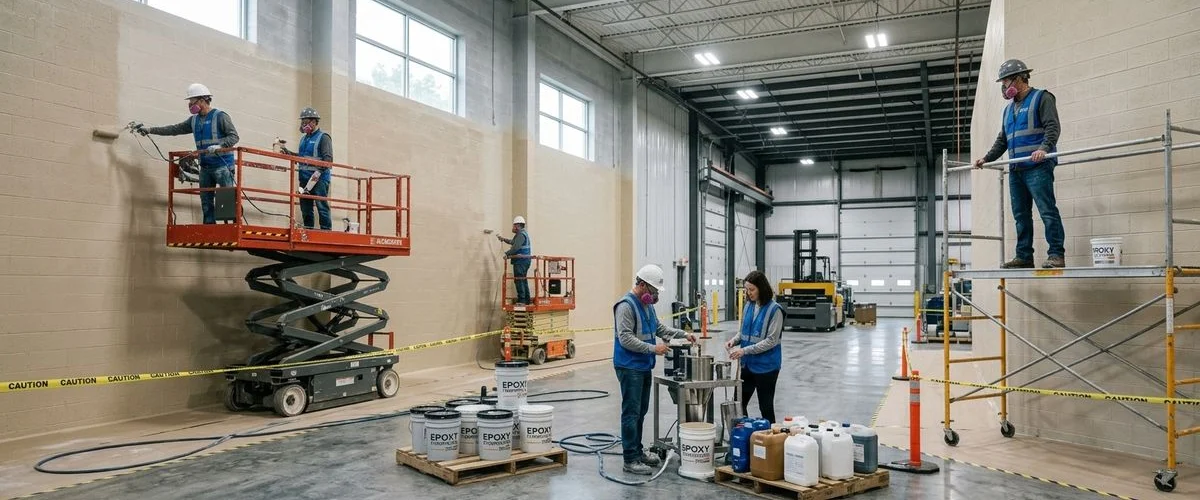
High-Performance Wall Coatings for Metro Detroit’s Production Environments
Not all industrial environments are equal, and no single coating system is appropriate for every application. The stamping lubricant mist in a Warren press shop demands a different wall coating than the daily caustic washdowns in an Eastern Market food processing plant. Our specification process starts with understanding your environment before we recommend a product.
Epoxy Wall Systems
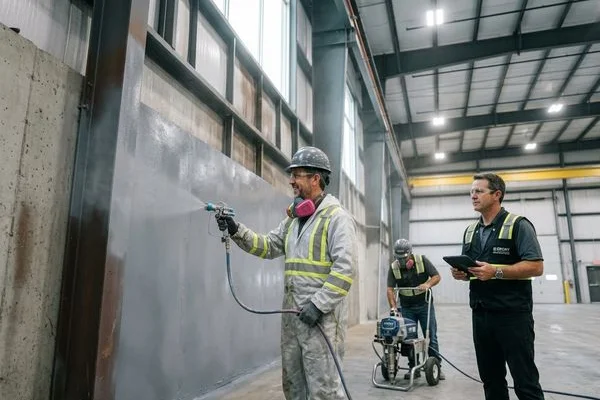
Two-component epoxy wall coatings provide excellent chemical resistance, washability, and durability for general manufacturing, warehousing, and light chemical exposure environments. Smooth, semi-gloss finishes improve light reflectivity — a meaningful benefit in the high-bay facilities common across Metro Detroit’s industrial base, where lighting efficiency in 40–50 foot ceiling heights matters both operationally and economically.
Polyurethane Topcoats
For facilities with abrasion exposure, UV exposure (skylights, loading dock aprons), or strict color retention requirements, aliphatic polyurethane topcoats are specified over epoxy primers. The combination delivers the chemical resistance of epoxy with the flexibility, UV stability, and cleanability of urethane. Several Detroit-area automotive suppliers have specified polyurethane wall topcoats to maintain the bright, consistent appearance OEM auditors expect.
Automotive Paint Shop Wall Coatings
Detroit’s automotive paint shops operate under some of the most demanding environmental conditions found in any manufacturing environment. The paint application booths and bake ovens at facilities across Dearborn, Flat Rock, and Hamtramck generate persistent solvent vapor, isocyanate overspray, and temperature swings that degrade conventional wall finishes within months. We specify chemically inert, high-temperature-tolerant wall systems purpose-built for these environments — typically a novolac epoxy or vinyl ester base coat with a smooth, non-porous topcoat that resists solvent softening and facilitates the aggressive cleaning schedules paint shop hygiene standards require. These systems also serve the dozens of aftermarket auto body and custom paint shops operating throughout the Metro Detroit corridor, where booth wall contamination from metallic flake overspray and urethane clearcoat solvents rapidly compromises coating integrity if the wall system is not properly specified for the exposure.
Novolac Epoxy for Chemical Environments
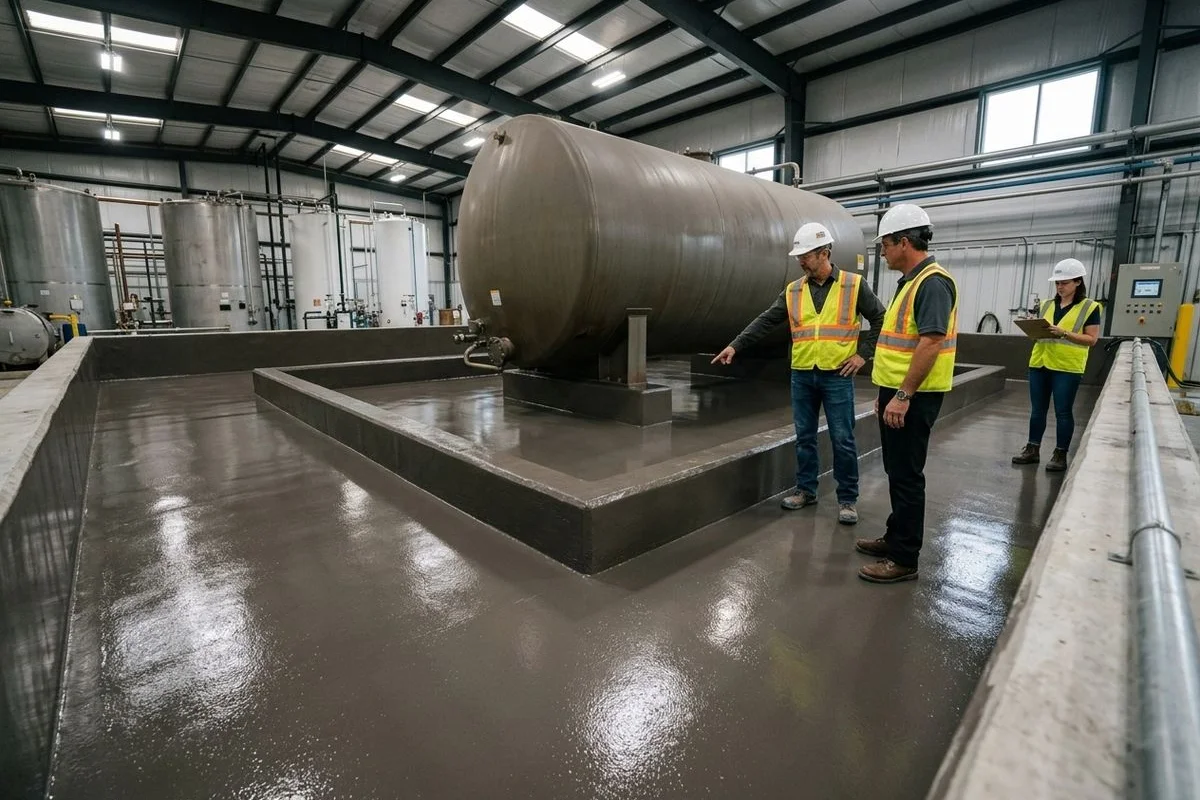
Production areas exposed to acids, solvents, or aggressive cleaning chemicals require more than standard epoxy. Novolac epoxy wall coatings provide superior chemical resistance for pharmaceutical manufacturing, chemical processing, and laboratory environments. In Metro Detroit, this includes automotive paint line preparation areas, battery manufacturing zones in the growing EV sector, and chemical distribution operations in the Downriver corridor.
Food-Safe and FDA-Acceptable Systems
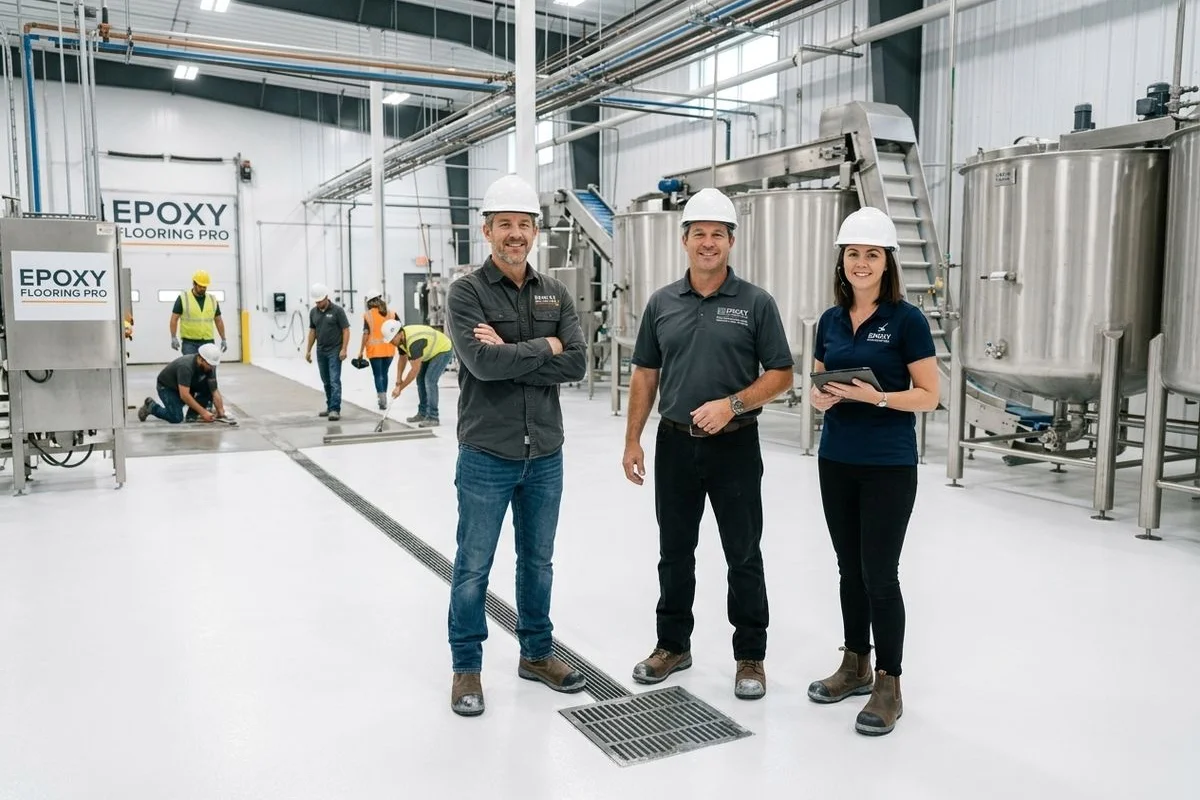
Detroit’s food processing sector — concentrated around Eastern Market, Southwest Detroit, and the I-75/I-94 industrial corridor — requires food-safe wall coatings that meet FDA, USDA, and NSF/ANSI 2 standards. These smooth, crevice-free, washdown-compatible systems withstand daily high-temperature, high-pressure washdowns without softening, delaminating, or harboring bacteria in surface irregularities. We install these systems in meat processing, bakery, beverage, and prepared food facilities throughout the metro area.
Anti-Corrosion Coatings for Detroit’s Aging Structural Steel
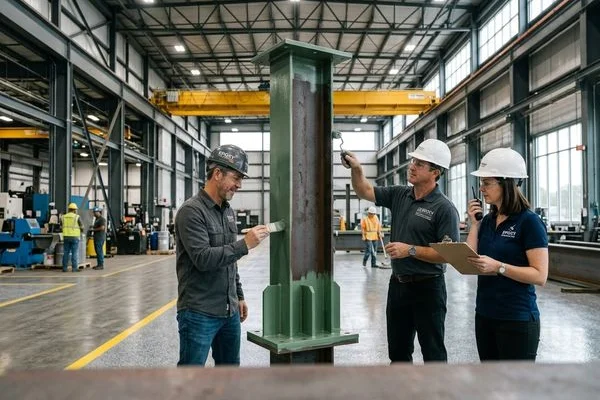
Many of Metro Detroit’s manufacturing facilities — particularly in the Dearborn, River Rouge, and Ecorse industrial corridors — house structural steel that has been exposed to decades of humidity, process chemical mist, road salt tracked in on truck tires, and seasonal temperature swings. Unprotected or poorly protected structural steel in these environments corrodes aggressively. Once corrosion begins, it spreads under existing coatings, causing delamination and accelerating structural degradation.
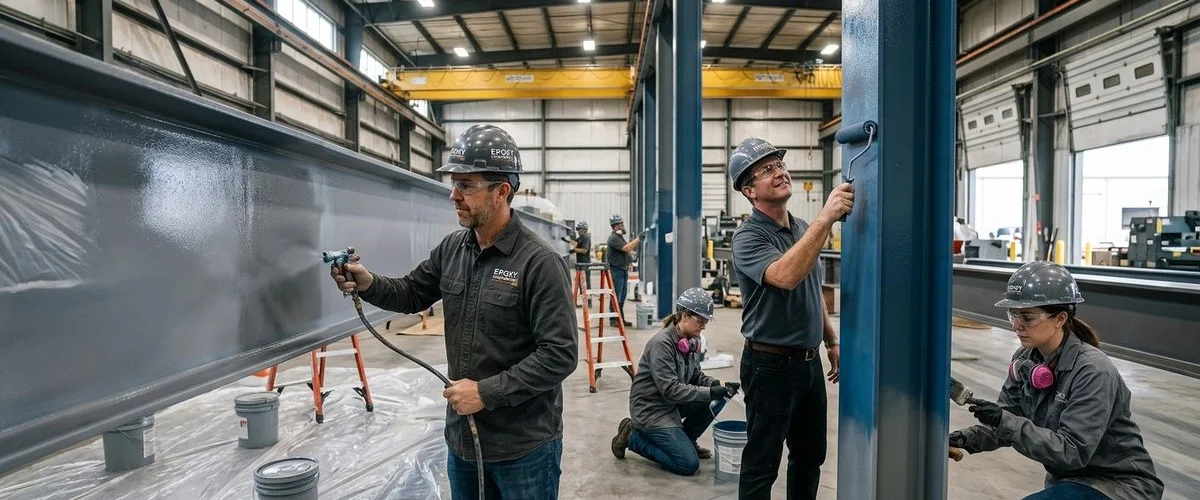
Our steel coating protocol starts with proper surface preparation: abrasive blasting to SSPC-SP6 or SP10 standards, depending on existing corrosion levels and specified primer requirements. Zinc-rich primers provide sacrificial cathodic protection for steel in the most aggressive environments. Intermediate epoxy coats build mil thickness and chemical resistance. Polyurethane or epoxy topcoats complete the system with color, UV resistance, and surface protection.
The salt and humidity exposure common in Metro Detroit facilities — where winter road salt enters through loading docks and overhead doors stay open during warm-weather production — makes anti-corrosion treatment of exposed steel a maintenance priority, not a cosmetic choice.
Ceiling Coatings: The Overlooked Surface in Detroit’s High-Bay Facilities
Facility ceilings are often the last surface considered and the first to show deterioration. In Metro Detroit’s high-bay manufacturing plants — many with 30 to 50 foot ceiling heights housing cranes, overhead conveyors, and extensive HVAC ductwork — flaking ceiling paint creates a contamination risk in food and pharmaceutical facilities and a constant housekeeping nuisance in general manufacturing.
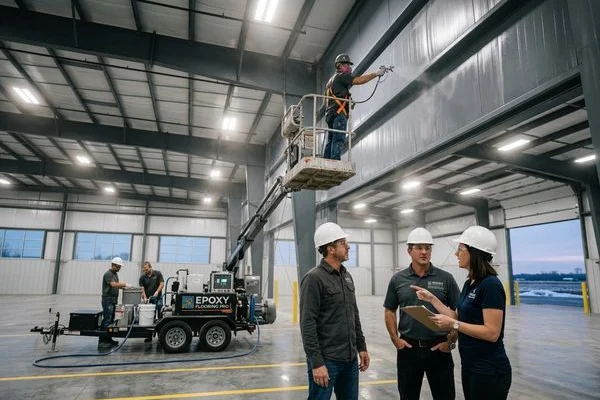
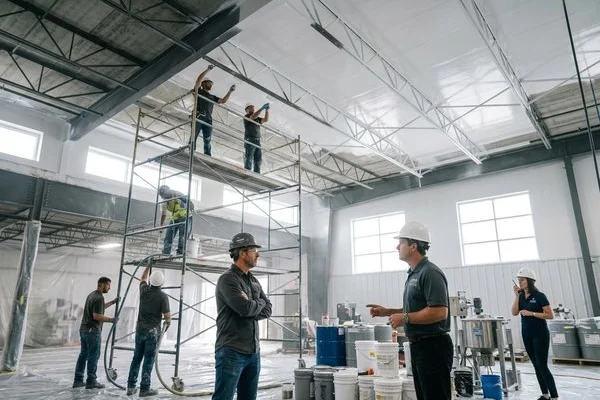
Dark, uncoated ceilings absorb light, driving up energy costs in facilities that run lighting around the clock. Our ceiling coating programs typically involve a high-build white or light-colored epoxy or polyurethane system applied by airless spray. Improved light reflectivity typically reduces lighting requirements by 15–25% in high-bay environments — a significant cost savings for the large-footprint facilities common in this market.
Michigan’s high humidity levels — particularly during the summer months when dew points regularly exceed 65°F — accelerate the degradation cycle for both ceiling and wall coatings in facilities with poor climate control. In the older industrial buildings concentrated along the Rouge River corridor and the Fort Street industrial belt, inadequate ventilation allows moisture to condense on cooler steel and masonry surfaces, creating the conditions for blistering, delamination, and microbial growth behind the coating film. The problem compounds in winter when heated interior air meets cold exterior walls and uninsulated roof decks, generating persistent condensation on overhead structural steel. Our coating specifications for these high-humidity environments include moisture-tolerant epoxy primers that cure properly even at elevated humidity levels, vapor-permeable intermediate coats that allow trapped moisture to escape without blistering the topcoat, and high-reflectivity finishes that improve light distribution from upgraded LED high-bay fixtures — often part of the same facility refresh that brings us into these plants. The combined effect of reflective wall and ceiling coatings with modern LED lighting reduces energy consumption substantially in the 100,000+ square foot facilities typical of Metro Detroit’s industrial base.
For food processing areas across Metro Detroit, smooth, washable ceiling systems eliminate the contamination risk of flaking conventional paint and satisfy the sanitation requirements that FDA and USDA inspectors enforce during facility audits.
Coordinated Scheduling for Detroit’s Production Facilities
Detroit’s manufacturing sector operates on tight production schedules. Automotive assembly plants and their supply chain run close to 24/7, with shutdown windows measured in days rather than weeks. When we take on a turnkey project, our project managers develop a sequenced work plan that respects those constraints.
Walls and ceilings are completed and cured before floor work begins. Masking and containment protect completed work during adjacent operations. For facilities with annual summer or holiday shutdown windows — common among Detroit’s automotive Tier 1 suppliers — we pre-plan material staging and crew sizing to maximize work completed within the available downtime.
This coordination is impossible when two separate contractors are involved. Overspray from a painting crew can contaminate a floor coating applied by a different crew two days earlier. Our single-contractor model eliminates that risk entirely.
Serving Metro Detroit’s Industrial Corridor
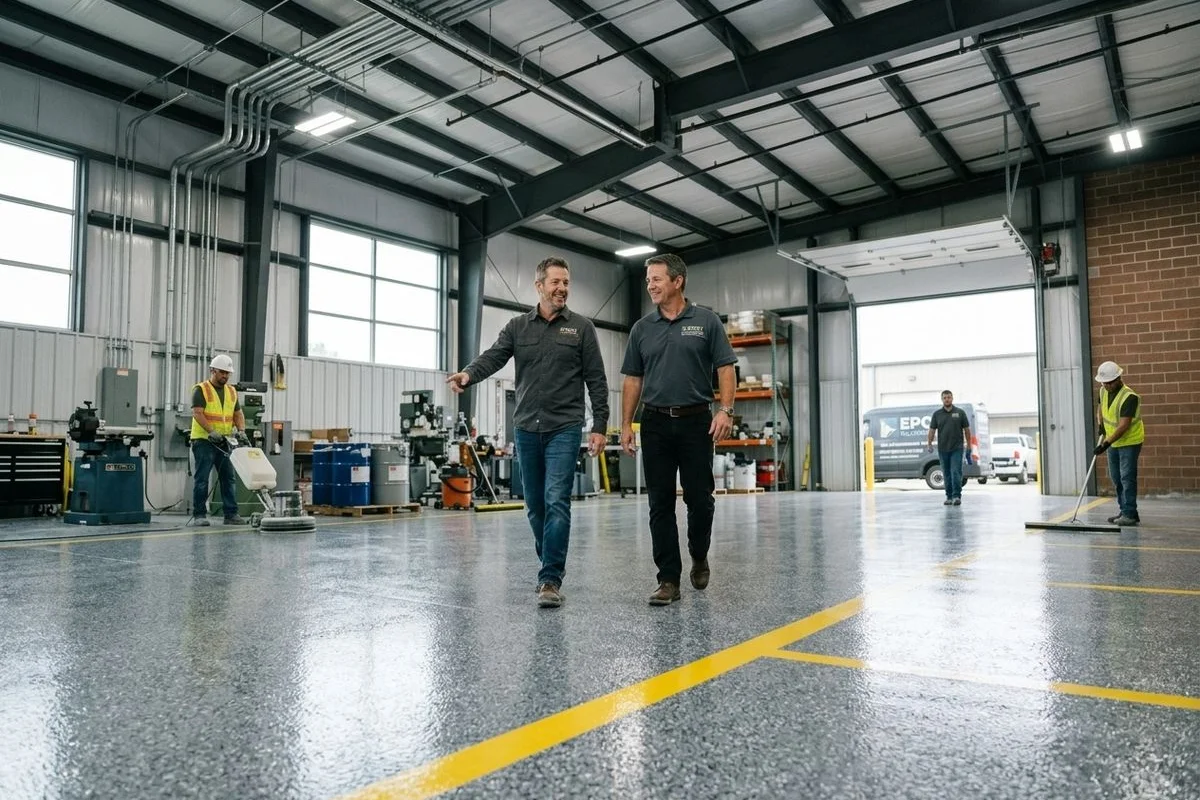
Epoxy Flooring Pro has delivered industrial painting and wall coating projects across Metro Detroit’s manufacturing base — from Dearborn and River Rouge to Warren, Sterling Heights, and Livonia. Our project portfolio includes automotive OEM facilities, Tier 1 and Tier 2 suppliers, food and beverage processors serving Eastern Market and surrounding distribution networks, pharmaceutical manufacturers, chemical distributors, and the growing EV and battery manufacturing sector centered around Factory ZERO and its supply chain.
Whether your facility is a 50,000 square foot Tier 2 stamping operation or a 500,000 square foot assembly plant, we bring the same turnkey capability: one contractor, one schedule, one standard of quality — floor to ceiling.
Contact us today for a facility assessment and turnkey coating specification for your Metro Detroit industrial operation.
What's Included
Our Industrial Painting Installation Process
Facility Assessment
We walk every surface — walls, ceilings, columns, structural steel — and document existing conditions, substrate types, contamination, and coating history.
System Specification
We engineer a coating system matched to your environment: chemical exposure, temperature range, sanitation requirements, and aesthetic standards.
Surface Preparation
Abrasive blasting, power tool cleaning, and chemical degreasing remove all contaminants. Masonry is patched and primed. Steel receives appropriate blast profile.
Anti-Corrosion Primer Application
Zinc-rich or epoxy-based primers are applied to all steel and high-risk masonry surfaces to prevent corrosion and ensure long-term adhesion.
High-Performance Topcoat Application
Polyurethane or epoxy topcoats are applied in specified mil thicknesses, providing the durability, cleanability, and chemical resistance your facility demands.
Final Inspection & Documentation
Dry film thickness readings, adhesion tests, and photographic documentation are compiled into a project report for your records.
Why Choose Epoxy Flooring Pro
True Turnkey Capability
We handle floors, walls, ceilings, and structural steel — no need to coordinate separate painting and flooring contractors with conflicting schedules.
Industrial-Grade Materials Only
We spec and apply the same high-performance coatings used in automotive plants, food processing facilities, and pharmaceutical manufacturing — not commercial-grade paints.
Shutdown Planning Expertise
We understand that every hour of downtime costs money. Our project managers develop phased work plans that minimize operational interruption — critical for Detroit's 24/7 automotive production schedules.
Documented Quality Control
Every project includes adhesion pull tests, DFT readings, and photographic documentation — the same QC protocols demanded by Tier 1 manufacturers.
Project Gallery
What Our Clients Say
"We needed our entire 180,000 square foot Dearborn facility recoated — floors, walls, columns, and the 40-foot ceiling in our high bay. Coordinating three different contractors was a scheduling nightmare on the last project. Epoxy Flooring Pro handled everything with one crew, one schedule, and the work was completed during our two-week August shutdown. The anti-corrosion treatment on our overhead steel alone would have been a separate project with anyone else."
"Our Detroit food processing facility needed NSF-compliant wall coatings that could handle daily high-temperature washdowns without softening or peeling. Epoxy Flooring Pro specified the right system, coordinated the wall work with our floor recoating project, and finished two days ahead of schedule. One invoice, one point of contact, and every surface meets our sanitation requirements."
Frequently Asked Questions
What types of Detroit-area facilities do you serve with industrial painting?
What wall coating systems do you apply in automotive manufacturing environments?
Can you coat ceilings and structural steel in high-bay facilities?
How do you manage fumes and overspray in operating Detroit production facilities?
Do you offer anti-corrosion coatings for structural steel in Metro Detroit facilities?
Will the wall coating work coordinate with floor coating on the same project?
Get a Free Estimate for Industrial Painting
Our project managers are ready to assess your facility and recommend the optimal industrial painting solution.