
Fix Peeling, Blistering & Delaminating Floor Coatings in Detroit, MI
Diagnose and fix failing floor coatings in Detroit — peeling epoxy, blistering, delamination, and premature coating failure caused by Michigan moisture, freeze-thaw, and cold-weather application errors.
When a New Floor Fails in Detroit, the Cause Is Almost Always Predictable
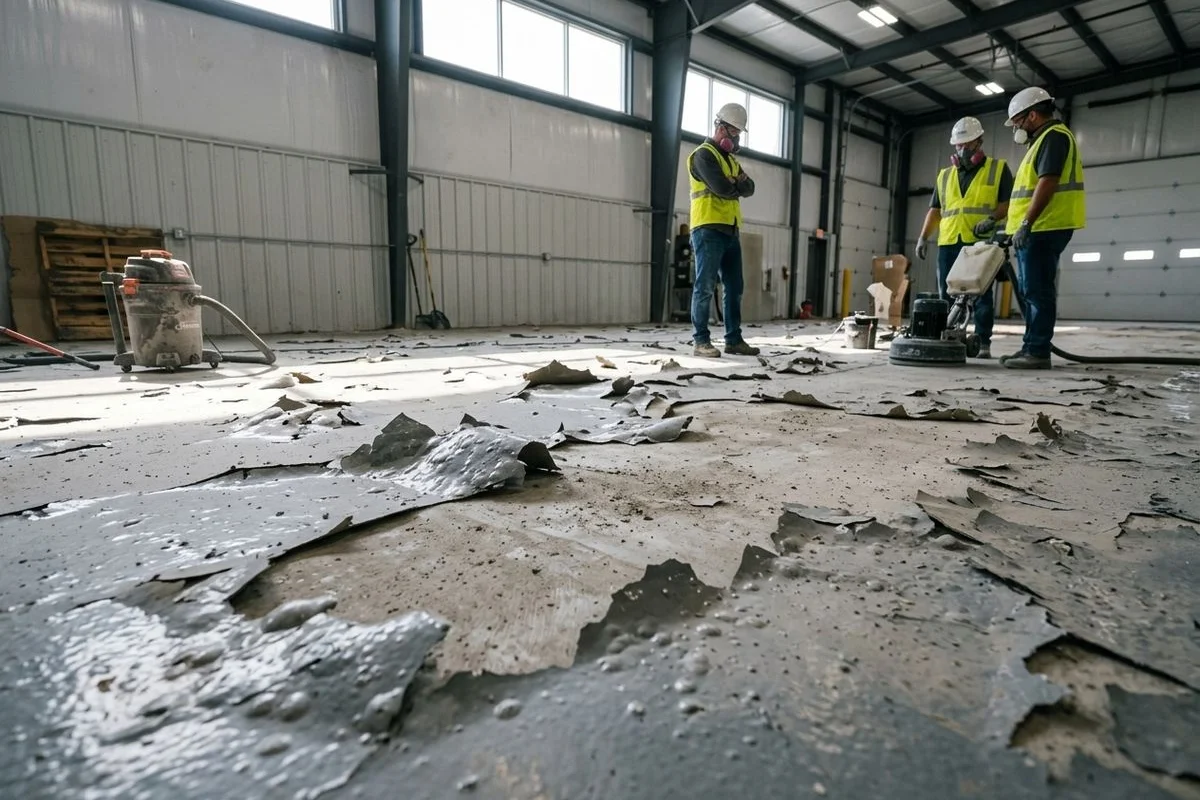
A properly specified and installed epoxy floor coating should last years — often decades — before requiring remediation. When an epoxy floor starts peeling within months, blistering within weeks, or delaminating in sheets within days of application, it is not bad luck. It is a preventable failure caused by a specific, identifiable mistake in specification, surface preparation, or application — and in Metro Detroit, the same handful of causes account for the vast majority of failures we investigate.
Detroit’s industrial environment presents a concentrated set of conditions that cause floor coatings to fail: high water tables that drive moisture vapor through concrete slabs, 30+ freeze-thaw cycles per winter that stress substrates and coatings alike, cold-weather installations in unheated facilities that produce under-cured coatings, and aging industrial concrete from the mid-century automotive boom that has accumulated decades of contamination and damage. Every one of these failure modes is diagnosable, and every one is correctable.
Epoxy Flooring Pro has investigated and corrected hundreds of failed floor coating installations across Metro Detroit. We do not guess at what went wrong. We test, document, and fix the actual problem.
The Four Most Common Causes of Floor Coating Failure in Detroit
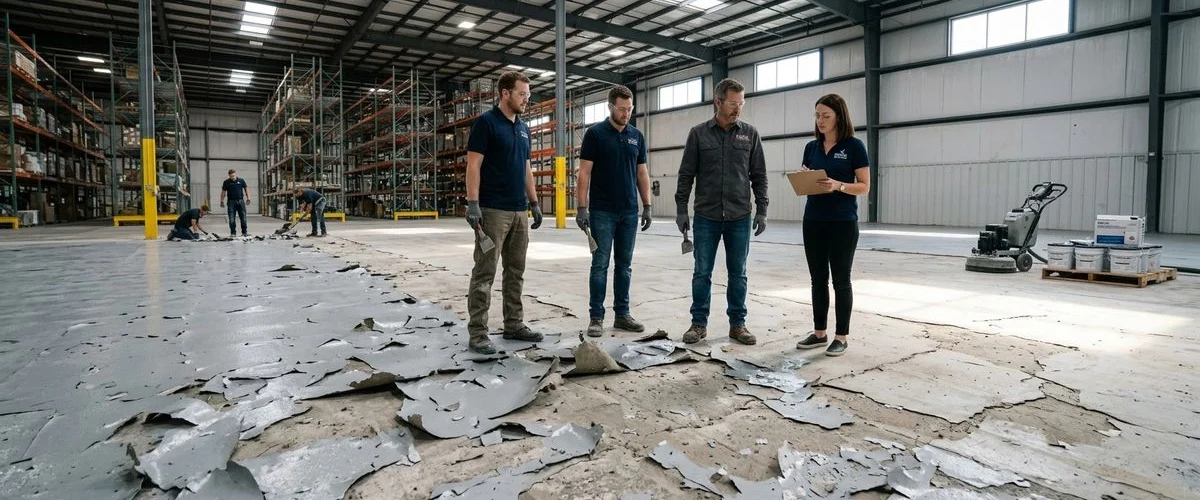
Understanding why floors fail is the prerequisite to fixing them correctly. In our investigations across Metro Detroit facilities — from Dearborn automotive plants to Romulus logistics centers to Livonia manufacturing operations — four failure modes account for the majority of premature coating failures:
1. Inadequate Surface Preparation
Surface preparation is the foundation of every coating installation. Inadequate preparation — whether from using the wrong method, insufficient equipment, or skipping steps to save time — produces a concrete surface that cannot sustain the adhesion values required for long-term performance.
The most common preparation failures we encounter in Detroit facilities include:
Insufficient surface profile (CSP): Every coating manufacturer specifies a required concrete surface profile. Shot blasting achieves CSP 3–5. Diamond grinding achieves CSP 2–3. Simple acid etching achieves at best CSP 1–2. Using acid etching for a system that requires shot blasting produces adhesion values far below specification — and eventual delamination is the result. Detroit’s aging industrial slabs often have dense, hard-troweled finishes from mid-century construction that require aggressive mechanical preparation.
Surface contamination: Oil, grease, curing compounds, sealers, and even microscopic concrete dust can prevent proper adhesion. Floors with chemical damage — common in Detroit’s automotive and chemical processing facilities — require particularly thorough decontamination. Decades of accumulated oil in old Detroit factory slabs can migrate through the concrete and re-contaminate prepared surfaces within hours if not properly addressed.
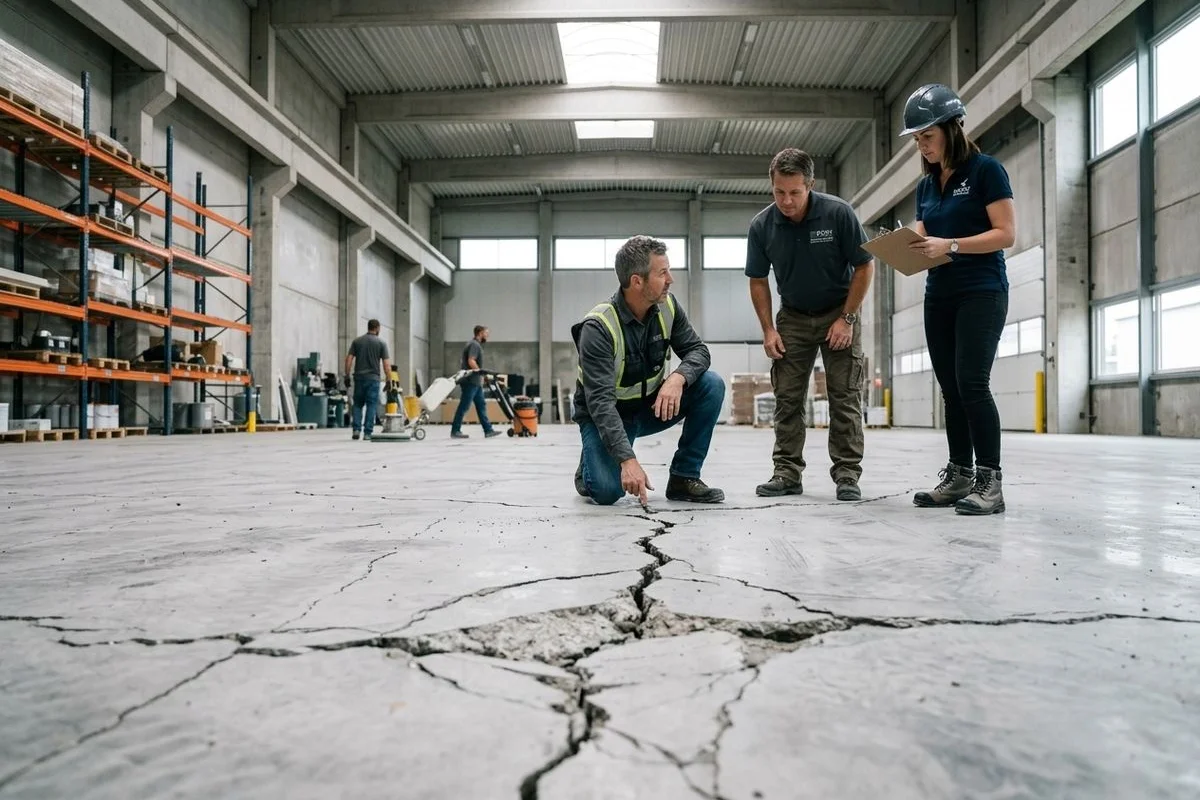
Inadequate crack repair: Cracks that are surface-filled rather than properly routed and sealed transmit movement to the coating layer, creating stress concentrations that initiate delamination. Detroit’s freeze-thaw cycling makes this worse — every winter cycle drives water into improperly sealed cracks, expanding and propagating the damage.
2. Moisture Vapor Emission
Moisture vapor is the single most common cause of coating delamination in Metro Detroit — and the most frequently missed problem in pre-installation inspection. Southeast Michigan’s high water tables, particularly in the Downriver communities, along the Rouge River corridor, and in the low-lying industrial areas east of the city, create persistent moisture vapor transmission through concrete slabs on grade.
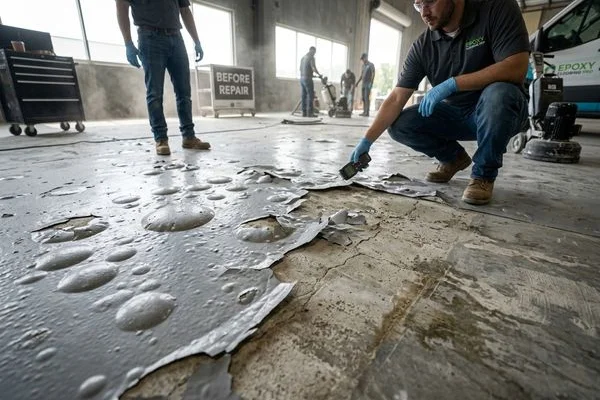
When moisture vapor pressure at the concrete surface exceeds the adhesive strength of the coating bond, the coating delaminates. This typically begins as small circular blisters — often appearing within weeks of installation — that expand, connect, and eventually produce sheets of delaminating coating.
ASTM F1869 (calcium chloride test) and ASTM F2170 (in-situ relative humidity probe) are the standard test methods for measuring moisture vapor emission rate. Both have manufacturer-specified threshold limits that must not be exceeded before coating application. We test for both on every Detroit project — because moisture vapor is so prevalent in this region that skipping the test is effectively guaranteeing a percentage of failures.
3. Application Outside Product Parameters
Two-component epoxy systems have defined working conditions: minimum and maximum application temperature, maximum relative humidity, minimum dew point differential, and open time limits. In Metro Detroit, where winters are long and many industrial facilities have minimal heating in warehouse and production areas during shutdowns, cold-weather application failures are endemic.
A contractor applies coating at 42°F in an unheated Detroit warehouse during a January shutdown because the production schedule demands it. The coating appears to cure but is significantly under-crosslinked. Six weeks later, under normal forklift traffic and chemical exposure, adhesion fails and the coating peels. We see this pattern repeatedly across Metro Detroit — the pressure to meet production deadlines during winter shutdown windows overrides product requirements, and the floor pays the price.
Summer humidity in southeast Michigan creates the opposite problem: high ambient humidity and warm concrete surfaces with dew point convergence produce moisture condensation on the concrete surface during application. The coating is applied over a microscopically wet surface and adhesion is compromised from day one.
4. Product Incompatibility and Recoat Window Violations
Coating systems are formulated as stacks — primer, intermediate coat, topcoat — where each layer is chemically compatible with the layer above and below. Mixing products from different manufacturers, applying a recoat after the specified recoat window has closed, or applying a new system over an existing coating that was not properly prepared creates adhesion failures that are often invisible at application but appear within weeks as the system ages.
In Detroit’s competitive coating market, value-engineering substitutions — where a cheaper product is substituted for the specified material mid-project — account for a measurable percentage of the failures we investigate.
Our Remediation Process: Fix the Problem, Not the Symptom
Step One: Investigation Before Action
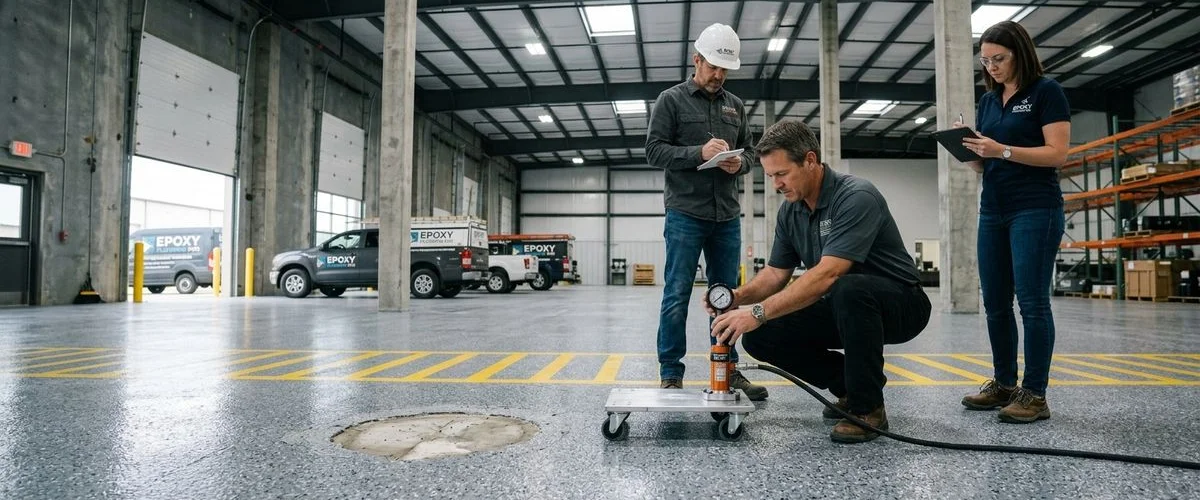
We do not arrive at a failed Detroit floor and immediately begin applying materials. Investigation comes first. Our assessment includes adhesion pull testing to measure what bond strength remains, ASTM F1869 and ASTM F2170 moisture vapor tests — essential given Metro Detroit’s moisture conditions — pH testing, and a thorough review of installation records if available.
The investigation findings are documented in a written failure report that identifies the specific failure mode, the evidence supporting that conclusion, and the recommended remediation approach. This report is a technical document that stands on its own — whether you need it for internal decision-making, warranty claims against the original contractor, or legal proceedings.
Step Two: Complete Removal of Failed Material
Every square foot of failed coating material is removed before any new material is applied. Shot blasting removes coating down to bare concrete in a single pass on most applications. Diamond grinding removes stubborn adhesive residues and corrects surface profile. Detroit’s aging industrial slabs sometimes have multiple layers of previous coatings — each one potentially contributing to the current failure — and all layers must be removed to expose sound concrete.
Step Three: Substrate Correction
Correcting the concrete substrate is often the most important part of remediation in Detroit facilities. If moisture vapor was the failure mode — and in Metro Detroit, it frequently is — a moisture vapor mitigation system is installed before the new coating. If CSP was inadequate, shot blasting corrects the profile. If contamination from decades of industrial use has saturated the concrete, chemical cleaning, testing, and potentially deeper mechanical removal confirm its elimination.
For Detroit facilities with freeze-thaw damage to the substrate — scaling, spalling, and microcracking from years of winter cycling — we assess whether the concrete surface is sound enough to receive a coating or whether repair mortar is required to rebuild a stable substrate.
Step Four: Warranted Replacement System
The replacement system is specified for the corrected substrate conditions — not the same system that failed, but a system engineered for the actual conditions of your specific concrete slab in your specific Metro Detroit location. Moisture vapor mitigation where Detroit’s water tables demand it. Cold-weather-appropriate cure chemistry where the facility cannot guarantee warm application conditions. Proper CSP for the specified system. Every replacement installation we perform is documented and warranted.
If your floor coating failed prematurely — regardless of who installed it — contact Epoxy Flooring Pro. We will tell you exactly what went wrong and fix it correctly. Metro Detroit’s climate and substrate conditions are demanding, but they are entirely manageable when the floor system is specified and installed by a contractor who understands them.
What's Included
Our Failing Floor Coatings Installation Process
Failure Investigation
We inspect the failed floor, review available installation records, and perform adhesion pull tests, moisture tests, and pH tests on the substrate to identify the failure mode.
Root-Cause Documentation
We document findings in a written failure report that identifies the specific cause — inadequate surface preparation, moisture vapor, contamination, product incompatibility, or application error.
Failed Coating Removal
All failed coating material is removed by shot blasting, diamond grinding, or mechanical scraping, depending on the failure type and extent. No remediation is applied over failed material.
Substrate Correction
The underlying concrete problem is addressed: CSP is corrected to the required profile, moisture vapor mitigation is installed where needed, cracks and joints are repaired, and contamination is eliminated.
Warranted System Installation
A new coating system appropriate for the corrected substrate is installed with verified surface prep, moisture testing, application conditions, and mil thickness documentation.
Project Documentation
Complete project documentation is provided: surface prep verification, moisture test results, product data sheets, application records, and warranty documentation.
Why Choose Epoxy Flooring Pro
We Find the Real Problem
A new coat of epoxy over a failed surface will fail again for the same reason. We do not begin remediation until we understand why the floor failed. Our root-cause approach ensures the replacement system addresses the actual problem.
Moisture Vapor Expertise
Moisture vapor is the most common cause of coating delamination and the most commonly missed failure mode. We perform ASTM F1869 and ASTM F2170 testing and specify vapor mitigation systems when readings exceed manufacturer limits.
Failure Reports for Warranty Claims
If your floor was installed by another contractor and failed prematurely, our written failure analysis documents what went wrong and why. This report supports warranty claims and legal proceedings if necessary.
We Warrant Our Remediation Work
Every replacement system we install is warranted. We back our work because we correct the underlying problem before we apply new material.
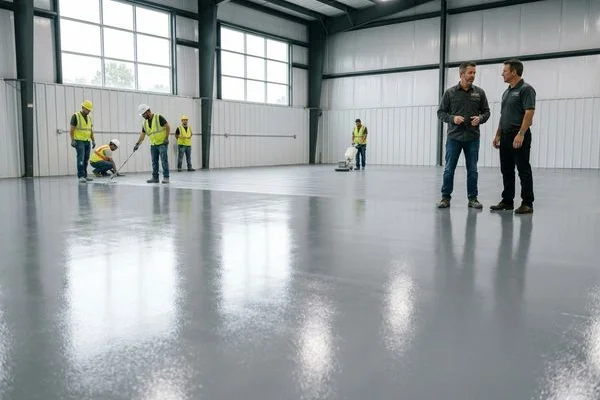
Before & After
Before
After
What Our Clients Say
"Our distribution center near the I-94/I-275 interchange had 40,000 square feet of epoxy that started delaminating in sheets six weeks after another contractor installed it. Epoxy Flooring Pro investigated, identified the moisture vapor problem — our slab sits near a high water table — installed a vapor mitigation system, and recoated the entire floor. That was two years ago and we have had zero adhesion issues since."
"The floor in our Livonia manufacturing plant was blistering badly after a winter installation. Epoxy Flooring Pro's investigation showed the previous contractor applied the coating at 42°F — well below the product minimum. They removed everything, waited for proper conditions, and installed a system that has performed flawlessly through two Michigan winters. Their failure report helped us recover the cost from the original contractor."
Frequently Asked Questions
Why are floor coating failures so common in Metro Detroit facilities?
How does Michigan's moisture vapor problem affect floor coatings in Detroit?
What happens when epoxy is applied during cold Michigan winters?
Can freeze-thaw cycling cause floor coatings to fail in Detroit?
How long does a failure investigation and remediation take?
My floor was installed by another contractor and failed. Can I use your report against them?
Get a Free Estimate for Failing Floor Coatings
Our project managers are ready to assess your facility and recommend the optimal failing floor coatings solution.