
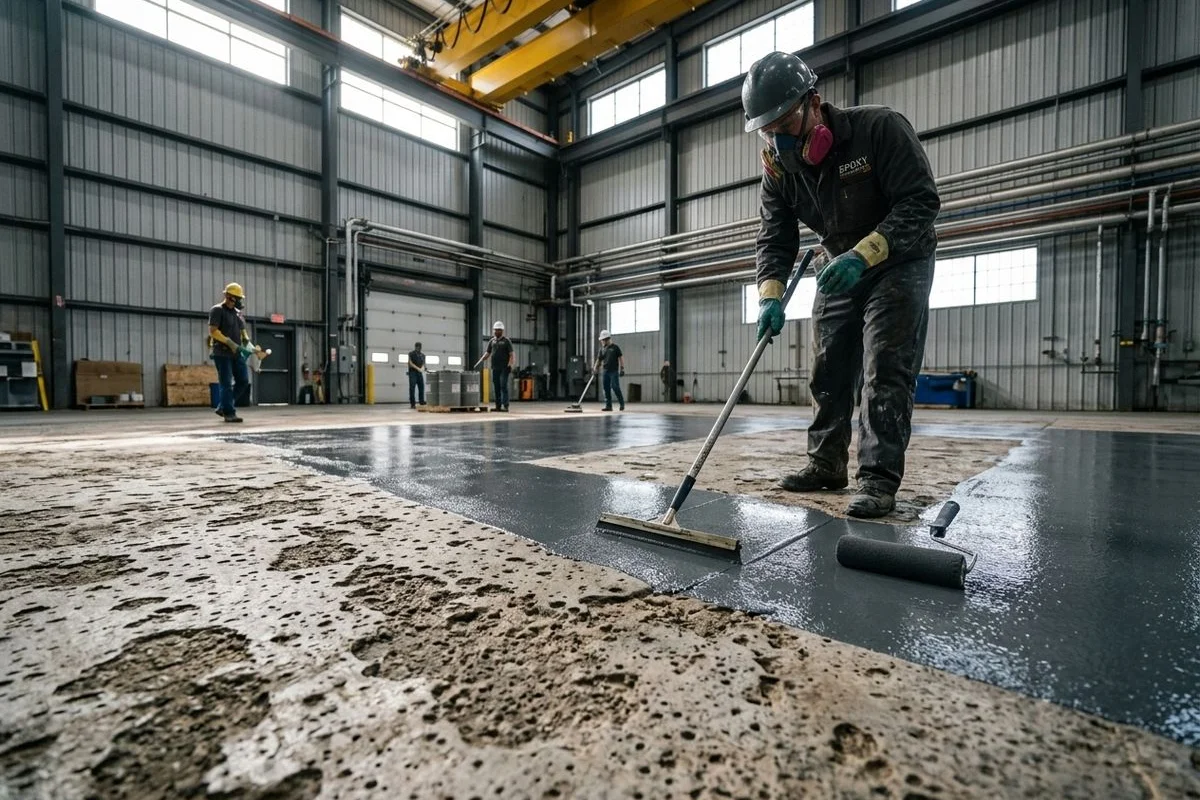
Chemical-Resistant Flooring for Acid & Solvent Damaged Concrete in Detroit, MI
Repair and protect chemically damaged concrete in Detroit with novolac epoxy and vinyl ester systems engineered for automotive, chemical, and EV battery manufacturing environments.
When Standard Epoxy Is the Wrong Answer for Detroit’s Chemical Environments
Walk into an automotive paint shop in Dearborn, a plating operation in a Tier 1 supplier facility along the I-75 corridor, or a chemical processing bay in the Wyandotte industrial district and propose a standard bisphenol-A epoxy floor system. Any experienced coating contractor who has worked Metro Detroit’s industrial base will tell you the same thing: it will not last. Standard epoxy has a well-documented limitation — it performs adequately in mild chemical environments and fails relatively quickly in environments with concentrated acids, aggressive solvents, or elevated-temperature chemical exposure.
The concrete beneath those environments tells the story of what happens when the wrong floor system is specified or the floor is left unprotected entirely: pitting, surface erosion, aggregate exposure, and in severe cases, structural deterioration of the concrete slab itself. Detroit’s industrial history means many of these slabs have endured decades of chemical exposure — from the mid-century automotive boom through today’s evolving manufacturing landscape that now includes EV battery production, advanced materials, and specialty chemical processing.
Epoxy Flooring Pro repairs concrete damaged by chemical attack across Metro Detroit and installs the correct protective system to prevent recurrence — novolac epoxy or vinyl ester, specified against your actual chemical exposure, with secondary containment integration where required.
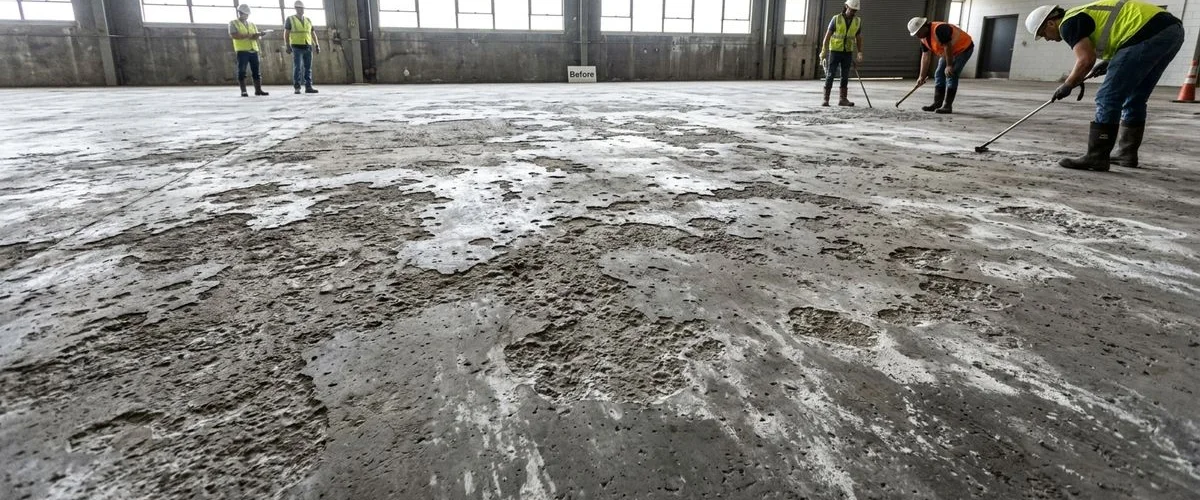
Understanding Chemical Resistance: Why Resin Chemistry Matters
Standard Bisphenol-A Epoxy
Standard epoxy resins — the chemistry used in most general-purpose industrial floor coatings — provide good chemical resistance to mild acids, mild alkalis, and some solvents. They are appropriate for environments with incidental chemical contact, dilute cleaning chemicals, and mild service conditions. They are not appropriate for the chemical environments that define Detroit’s industrial sector: concentrated acids in plating shops, aggressive solvents in paint operations, and corrosive electrolytes in battery manufacturing.
Novolac Epoxy
Epoxy novolac resins are produced by reacting epoxy with phenol formaldehyde novolac resin, producing a resin with a much higher crosslink density than standard epoxy. This dense crosslink structure is what delivers the performance improvement: higher chemical resistance, higher heat resistance, and better long-term stability in the aggressive chemical environments common across Metro Detroit’s manufacturing base.
Novolac epoxy floor systems are the standard recommendation for:
- Automotive paint shop solvents (MEK, acetone, xylene, toluene, aromatic thinners) — the daily reality in Dearborn, Flat Rock, and Wayne paint operations
- Plating and anodizing operations (sulfuric acid, chromic acid, heavy metal solutions) — found throughout Detroit’s Tier 1 and Tier 2 auto supplier network
- EV battery manufacturing (sulfuric acid, electrolyte compounds, NMP solvent) — Detroit’s rapidly growing sector
- Elevated temperature service up to approximately 180°F under most chemical exposures
- Aggressive cleaning chemical environments (strong alkali CIP systems in food processing near Eastern Market)
Vinyl Ester
Vinyl ester resin systems provide the highest level of chemical resistance available in a floor coating system. Where novolac epoxy provides excellent resistance to many aggressive chemicals, vinyl ester extends that resistance to chemicals that challenge even novolac — concentrated hydrochloric acid, chromic acid, many organic solvents at elevated temperatures, and bleach at high concentrations.
In the Wyandotte chemical corridor, where facilities handle concentrated mineral acids and specialty chemicals that push the limits of any coating system, vinyl ester is frequently the only appropriate specification. These systems are thicker, more complex to install, and more expensive than novolac epoxy — but they are specified when the chemical exposure analysis indicates novolac has a resistance limitation for one or more of the site’s specific chemicals.
EV Battery Manufacturing: Detroit’s New Chemical Frontier
The rapid expansion of Detroit’s electric vehicle ecosystem has introduced an entirely new category of chemical floor damage to the region’s manufacturing base. GM’s Factory ZERO on the former Hamtramck Assembly site, along with its growing network of battery module and pack assembly suppliers across Southeast Michigan, handles sulfuric acid electrolyte, lithium hexafluorophosphate solutions, NMP solvent used in cathode slurry preparation, and a range of proprietary electrolyte blends that did not exist in Michigan’s manufacturing vocabulary a decade ago. Battery acid containment at these facilities is not optional — a single cell puncture during module assembly can release electrolyte that penetrates standard epoxy within hours and begins dissolving the concrete substrate beneath. We specify novolac epoxy as the minimum for general production areas and vinyl ester for electrolyte filling stations, formation cycling areas, and anywhere concentrated electrolyte contact is possible. Full secondary containment with monolithic cove base is standard for these zones, and our chemical resistance documentation satisfies the environmental compliance requirements that EGLE enforces on battery manufacturing operations.
Automotive Coolant and Solvent Exposure at Legacy Plants
Beyond the newer EV facilities, Metro Detroit’s legacy automotive plants in Dearborn, Wayne, and the Sterling Heights corridor continue to present some of the most persistent chemical floor damage in the region. Decades of metalworking coolant accumulation — water-soluble oils, synthetic coolants, and semi-synthetic blends containing biocides, corrosion inhibitors, and EP additives — have saturated concrete slabs in machining areas to depths that shot blasting alone cannot remediate. Stamping operations along the I-94 corridor compound this with hydraulic fluid leaks, drawing compound residue, and phosphate conversion coating chemistry that etches unprotected concrete aggressively. In these environments, concrete rehabilitation frequently requires deep grinding followed by penetrating epoxy consolidation primer before the chemical-resistant topcoat system can be applied. We have rehabilitated machining and stamping floors in facilities that have been in continuous automotive production since the 1950s — slabs that carry the accumulated chemical history of Detroit’s industrial legacy in every crack, pit, and oil-saturated joint.
Chemical Resistance Charting: Engineering Before Installation
Every chemical-resistant flooring specification we produce for Detroit facilities is preceded by a chemical resistance analysis. We collect your complete chemical inventory — every chemical that contacts or may contact the floor surface, with concentration and temperature information — and cross-reference it against manufacturer chemical resistance charts.
Detroit’s industrial diversity means we regularly chart resistance for automotive-specific compound lists (paint solvents, plating chemicals, coolants, brake fluids), chemical processing inventories (mineral acids, caustics, organic solvents), EV battery manufacturing chemicals (sulfuric acid, lithium compounds, NMP), and food processing chemicals (organic acids, CIP compounds, sanitizers).
The output is a documented confirmation (or disconfirmation) of resistance for each specific chemical. If a chemical falls outside the specified system’s resistance range, we know before installation — not after failure. This documentation serves multiple purposes: it confirms the system is appropriate, provides a technical basis for the specification, and gives you a record for safety, regulatory, and environmental compliance documentation.
Concrete Rehabilitation: Repairing Decades of Chemical Damage
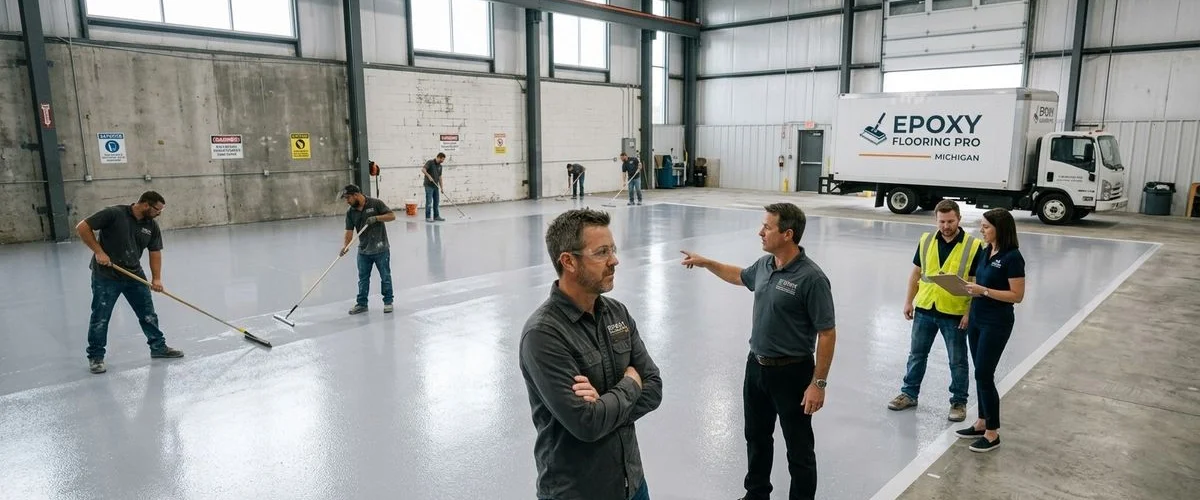
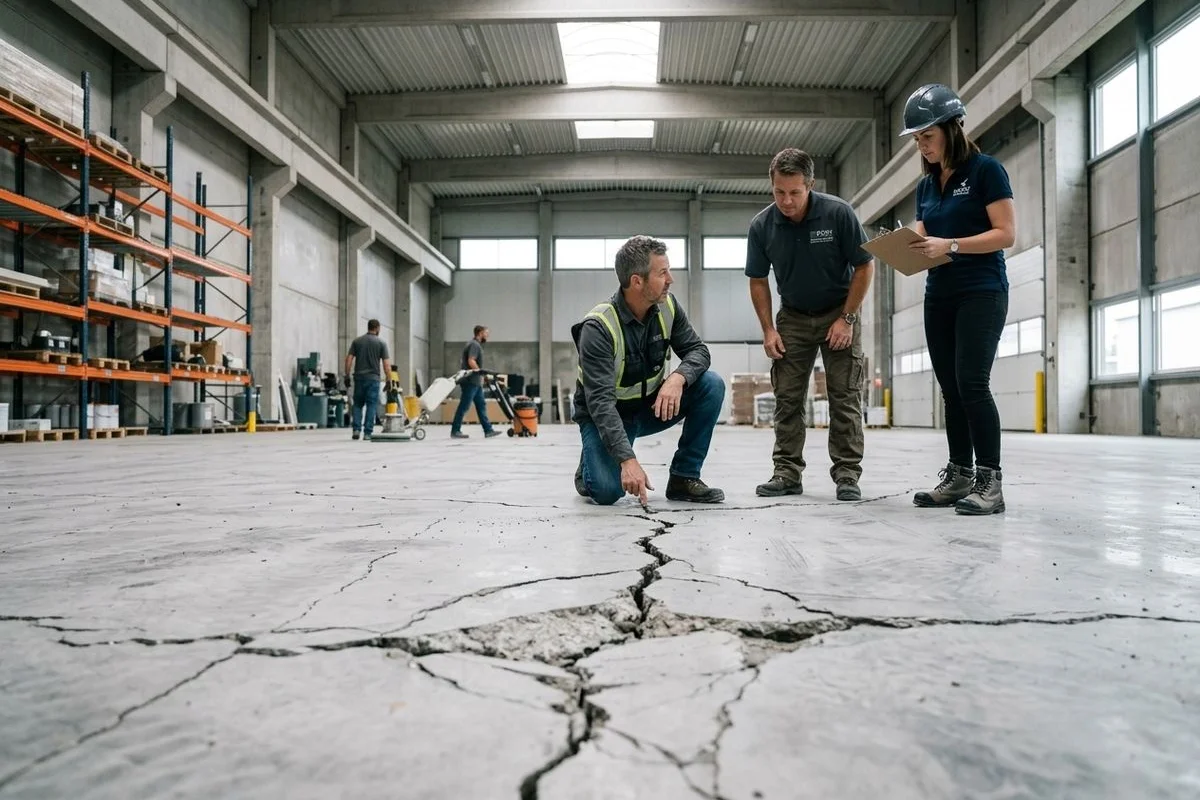
Detroit’s industrial concrete slabs tell the history of the city’s manufacturing legacy. Many slabs in active facilities date to the mid-twentieth century automotive expansion and have endured decades of chemical exposure — often without any protective coating or with coatings that failed years ago. The resulting damage is extensive and varied.
Surface etching: The cement matrix dissolves under acid exposure, leaving aggregate exposed and the surface rough, weak, and highly absorbent. Moderate etching can be corrected by shot blasting to remove the damaged surface layer and achieve the required surface profile.
Pitting and cratering: More advanced acid attack creates pits and craters as the cement matrix dissolves unevenly, particularly around aggregate particles. These must be filled with epoxy or cementitious repair mortar to create a smooth, sound substrate before coating application. In Detroit’s older facilities, pitting can be extensive after decades of accumulated exposure.
Deep structural damage: In severely neglected environments — and Detroit has facilities that have operated for 50+ years with minimal floor maintenance — acid attack can penetrate several inches into the concrete, weakening the structural slab. Assessment of structural integrity is required before coating decisions are made. In some cases, partial slab replacement is necessary before coating.
We assess the extent of damage honestly and recommend the appropriate repair approach. Detroit facility managers have seen enough failed quick-fix attempts to appreciate a realistic assessment over an optimistic one.
Secondary Containment: The Complete Chemical Management System
A chemical-resistant floor coating protects the concrete. Secondary containment manages spills so they do not reach unprotected areas. The two systems work together to create a complete chemical management zone — and in Detroit’s regulated chemical and manufacturing facilities, both federal EPA and Michigan EGLE requirements may mandate secondary containment for specific chemicals.
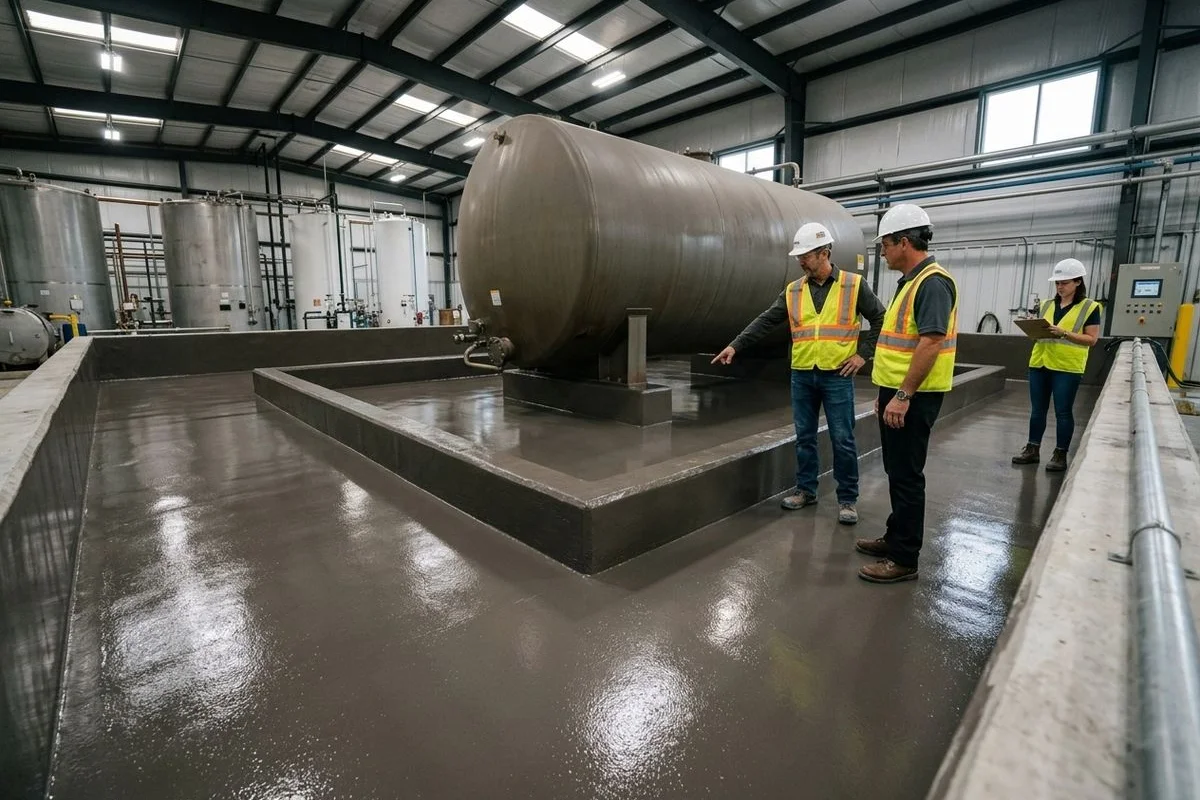
Our secondary containment installations use the same chemical-resistant system as the floor coating — novolac epoxy or vinyl ester — applied continuously from the floor surface up the containment berm and into the sump area. The cove base transition at the wall-to-floor joint receives the same treatment.
The result is a containment zone with no unprotected joints, transitions, or surfaces — a seamless chemical management system that intercepts every spill and directs it to a controlled sump for recovery or disposal. For Detroit facilities maintaining SPCC plans, SWPPP compliance, or hazardous materials permits, our containment systems provide the engineered barrier documentation required.
Contact Epoxy Flooring Pro to discuss your chemical exposure profile. Whether you operate an automotive paint shop in Dearborn, a chemical processing facility in Wyandotte, an EV battery manufacturing line, or any facility across Metro Detroit with aggressive chemical exposure, we will specify the right system, document the chemical resistance basis, repair your damaged concrete, and install a floor that protects your facility for the long term.
What's Included
Our Chemical Damaged Floors Installation Process
Chemical Exposure Assessment
We document all chemicals that contact or may contact your floor: type, concentration, temperature, contact duration, and frequency. This drives the system specification.
Chemical Resistance Charting
We cross-reference your chemical exposure list against manufacturer resistance charts for novolac epoxy and vinyl ester systems to confirm the recommended system will perform against every identified chemical.
Concrete Damage Assessment & Repair
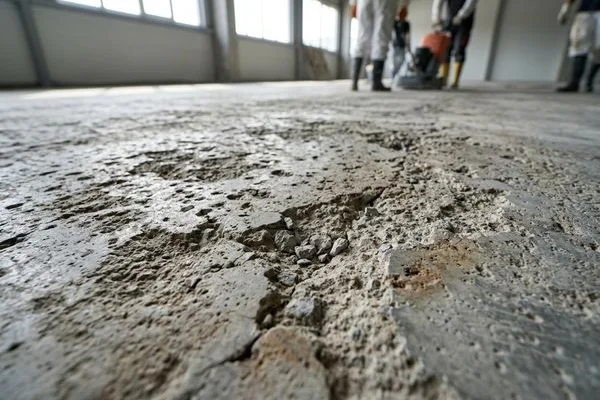
Acid-etched, pitted, and eroded concrete is assessed for depth and extent. Severely damaged areas are rebuilt with rapid-setting cementitious or epoxy repair mortars to restore a sound, level substrate.
Surface Preparation
Shot blasting or diamond grinding removes all damaged surface material, residual chemical contamination, and previous failed coatings. Surface profile is verified against system requirements.
Chemical-Resistant System Application
Novolac epoxy or vinyl ester system is applied in the specified build — primer, body coat(s), and chemical-resistant topcoat — with mil thickness verification at each stage.
Containment Integration & Cove Base
Secondary containment berms, sumps, and cove base transitions are installed as part of the system, creating a seamless, leak-proof containment zone from floor to wall.
Why Choose Epoxy Flooring Pro
Chemical Resistance Engineering
We do not guess at chemical resistance. Every system we specify is backed by manufacturer chemical resistance data for your specific chemicals. We provide the documentation confirming resistance before installation begins.
Novolac and Vinyl Ester Expertise
Standard epoxy is not appropriate for aggressive chemical environments. We have extensive experience with novolac epoxy and vinyl ester systems — the chemistry that performs where standard coatings fail.
Containment System Integration
Spill containment and secondary containment are part of our scope, not an afterthought. We integrate floor coatings with berms, sumps, and cove bases to create a complete chemical management system.
Concrete Substrate Rehabilitation
Chemical attack damages the concrete substrate before it damages the coating. We repair the concrete properly — rebuilding severely damaged areas with appropriate repair mortars — before the protective coating is applied.
Before & After
Before
After
What Our Clients Say
"Our Dearborn paint shop had concrete that was severely degraded from years of solvent exposure — MEK, acetone, and aromatic thinners had destroyed the previous coating and etched into the slab. Epoxy Flooring Pro rebuilt the damaged areas, installed a novolac epoxy system rated for every solvent we use, and integrated containment at the mixing stations. Two years of daily solvent exposure and the floor is holding perfectly."
"Our Wyandotte lab handles concentrated sulfuric, hydrochloric, and nitric acids daily. The previous floor coating failed within eight months. Epoxy Flooring Pro gave us a chemical resistance chart covering every compound in our inventory, specified a vinyl ester system, and installed it with full cove base containment. Our safety audits have been clean since the installation and the floor shows zero degradation after 18 months."
Frequently Asked Questions
What chemical exposures are most common in Detroit industrial facilities?
How do automotive paint shop solvents damage concrete floors?
What flooring is required for EV battery manufacturing facilities in Detroit?
Can you protect floors in the Wyandotte chemical corridor against mixed chemical exposure?
How do you handle secondary containment in Detroit chemical facilities?
What is the typical timeline for chemical-resistant flooring in an operating Detroit facility?
Get a Free Estimate for Chemical Damaged Floors
Our project managers are ready to assess your facility and recommend the optimal chemical damaged floors solution.